Did You Know? Solar Technology Keeps Getting Better
Over the past several decades, the cost of installing solar has dropped dramatically, and a big part of that story is simple: panels have gotten a lot better at their one job. A more efficient panel converts more of the sunlight hitting it into usable electricity, which means it can generate more power while occupying less roof space, directly lowering the cost of hardware and installation for the same energy output.
Panel efficiency isn't determined by any single factor. It depends on the spectrum and intensity of the sunlight hitting the panel, the temperature of the solar cells themselves, the angle and positioning of the installation, and how much cloud cover the sky is dealing with on a given day. One counterintuitive detail is worth highlighting: panels are actually more efficient at lower temperatures. Heat degrades photovoltaic performance, so a cool, sunny day produces more power than a scorching hot one at the same light intensity. That's genuinely good news for a region like the Bow Valley, where our climate leans cooler than the desert environments people often associate with solar power.
Beyond these environmental factors, ongoing research and development has driven real gains directly in the solar cells themselves. Efficiency varies by technology type and the environmental factors above, but average commercial panel efficiencies today generally land somewhere in the 15 to 20% range. On its own, that number might sound modest compared to a modern methane fired generator running at roughly 50% efficiency, or an efficient diesel generator at around 33%. But there's a crucial distinction that number alone doesn't capture: sunlight is a resource in effectively infinite supply. The sun will shine tomorrow whether or not we capture its energy today, and any unharvested sunlight simply arrives again the next day at no cost and no loss. Inefficiencies in a fossil fuel generator, by contrast, waste a finite, expensive, polluting resource permanently, with the lost energy released as heat and gone for good.
Another useful way to measure real world solar performance is capacity factor, which compares a system's actual average output to its rated maximum output. Because solar panels sit idle overnight by definition, capacity factors for solar are naturally lower than, say, a natural gas plant that can run continuously. Even accounting for that, southern Alberta's solar capacity factor sits around 18%, which ranks among the strongest in the entire country, a direct reflection of just how much usable sunlight this region actually receives.
Canada Energy Regulator. (2020, September 29). Economics of solar power in Canada – results. https://www.cer-rec.gc.ca/en/data-analysis/energy-commodities/electricity/report/solar-power-economics/economics-solar-power-in-canada-results.html
Dodge, D. & Thompson, D. (2016, February 9). Shining a light on solar myths. Pembina Institute. https://www.pembina.org/blog/shining-a-light-on-solar-energy-myths
IRENA. (2020). Renewable power generation costs in 2019. International Renewable Energy Agency, Abu Dhabi. https://www.irena.org/-/media/Files/IRENA/Agency/Publication/2020/Jun/IRENA_Power_Generation_Costs_2019.pdf
Kelly-Detwiler, P. (2019, September 26). Solar technology will just keep getting better: Here’s why. Forbes. https://www.forbes.com/sites/peterdetwiler/2019/09/26/solar-technology-will-just-keep-getting-better-heres-why/?sh=a91cc5d7c6bf
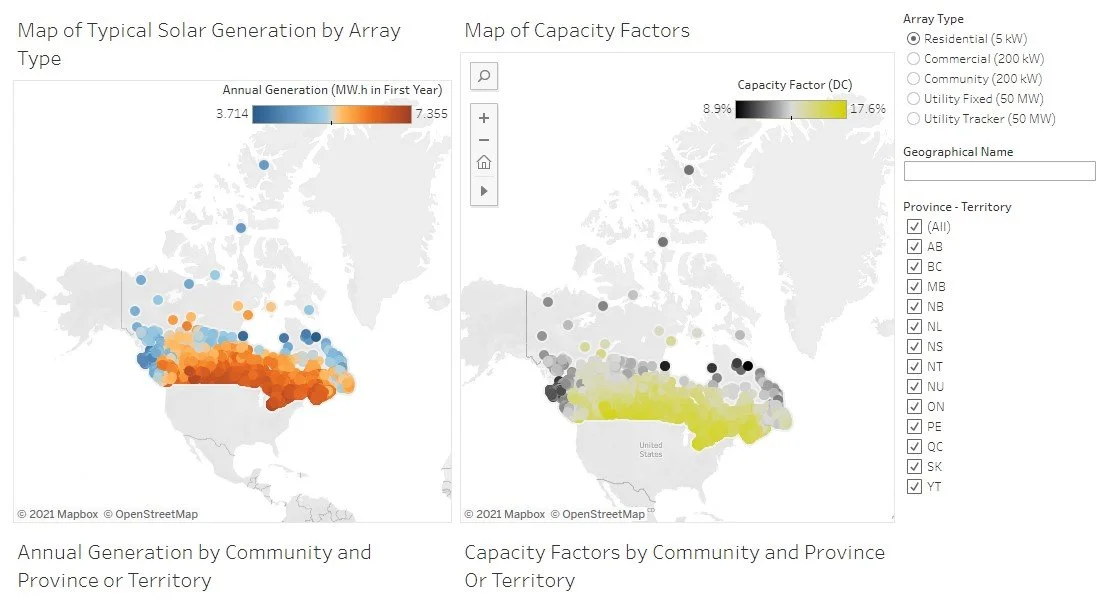
Map of capacity factors Canada (Source: CER, 2020)
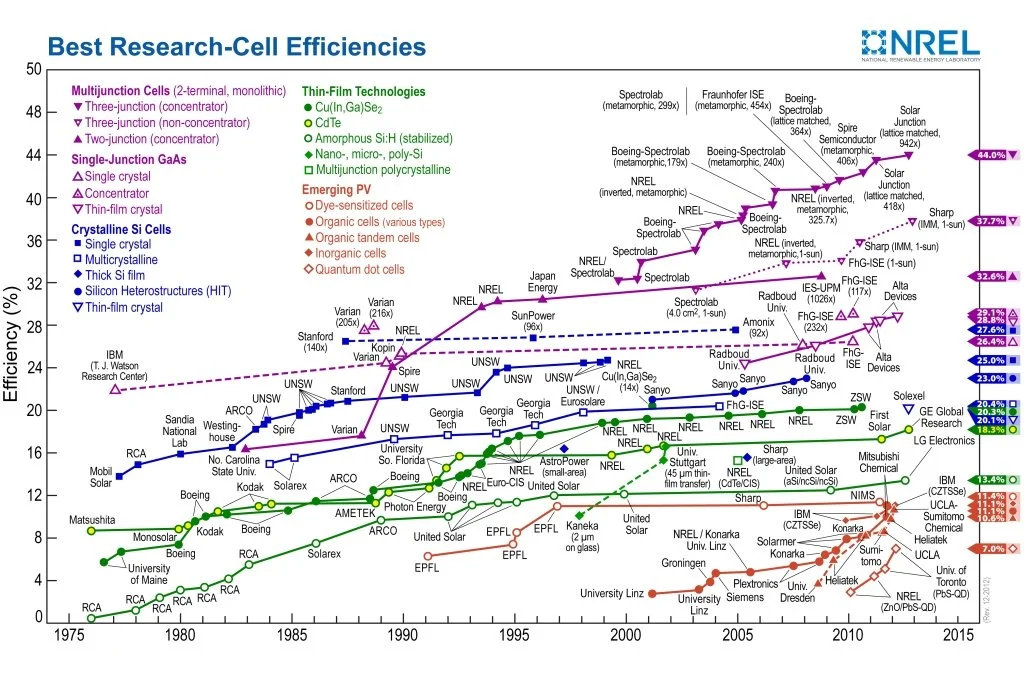
Best research-cell efficiency chart (NREL, 2020)