Did You Know? Solar Panels Are Almost Entirely Recyclable
Here's a number worth remembering: 96% of the materials in a typical solar panel can be recovered and reused to manufacture new panels. Combine that with an expected lifespan of 25 to 30 years per panel, and most of the solar hardware installed today simply isn't going to be a waste problem for a very long time.
That said, the solar industry is standing at the start of a genuinely massive growth curve, and it's worth planning ahead rather than waiting for a problem to arrive before addressing it. The International Energy Agency estimates that hitting global net zero emissions targets by 2050 requires solar generation capacity to grow by roughly 24% every single year between 2020 and 2030. That kind of exponential growth means an eventual, corresponding wave of panels reaching end of life decades from now, and because panels contain some materials that shouldn't go into a regular landfill, building out proper recycling infrastructure now, well ahead of that wave, matters. Alberta has already started moving in this direction: in May 2020, the provincial government announced a $43 million expansion of electronic recycling capacity that specifically includes solar module recycling.
It's also worth remembering that recycling sits at the bottom of the waste hierarchy for a reason, reduce and reuse should always come first. On the reduce side, ongoing research and development is steadily finding ways to manufacture panels using fewer raw materials in the first place, shrinking the eventual recycling burden before it even exists. On the reuse side, rapid growth in the solar industry has created a genuine secondary market for repaired and refurbished panels, meaning plenty of functional solar hardware gets a second life installed somewhere else entirely, without ever needing to be broken down and recycled at all.
The practical upshot for anyone considering solar today: the environmental math on disposal is far more favourable than most people assume, and it's only getting better as the industry matures.
References
International Energy Agency. (2021, November). Solar PV: Tracking report. https://www.iea.org/reports/solar-pv
Sinha, P., Heath, G., Wade, A., & Komoto, K. (2019). Human health risk assessment methods for PV, Part 3: Module disposal risks. International Energy Agency (IEA) PVPS Task 12, Report T12-16:2020. https://iea-pvps.org/wp-content/uploads/2020/05/PVPS-Task-12_HHRA-PV-Disposal-1.pdf
Solar Alberta. (2021). Solar 101 https://solaralberta.ca/learn/solar-101/
Weckend, S., Wade, A., & Heath, G. (2016). End-of-life management: Solar photovoltaic panels. International Renewable Energy Agency. https://www.irena.org/-/media/Files/IRENA/Agency/Publication/2016/IRENA_IEAPVPS_End-of-Life_Solar_PV_Panels_2016.pdf
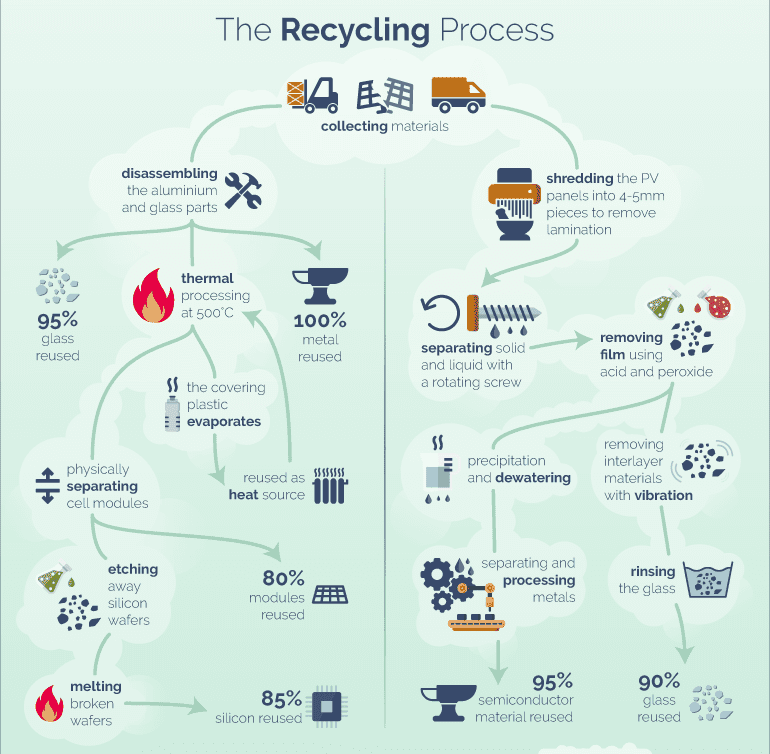
The opportunities of solar panel recycling (Source: greenmatch.co.uk)
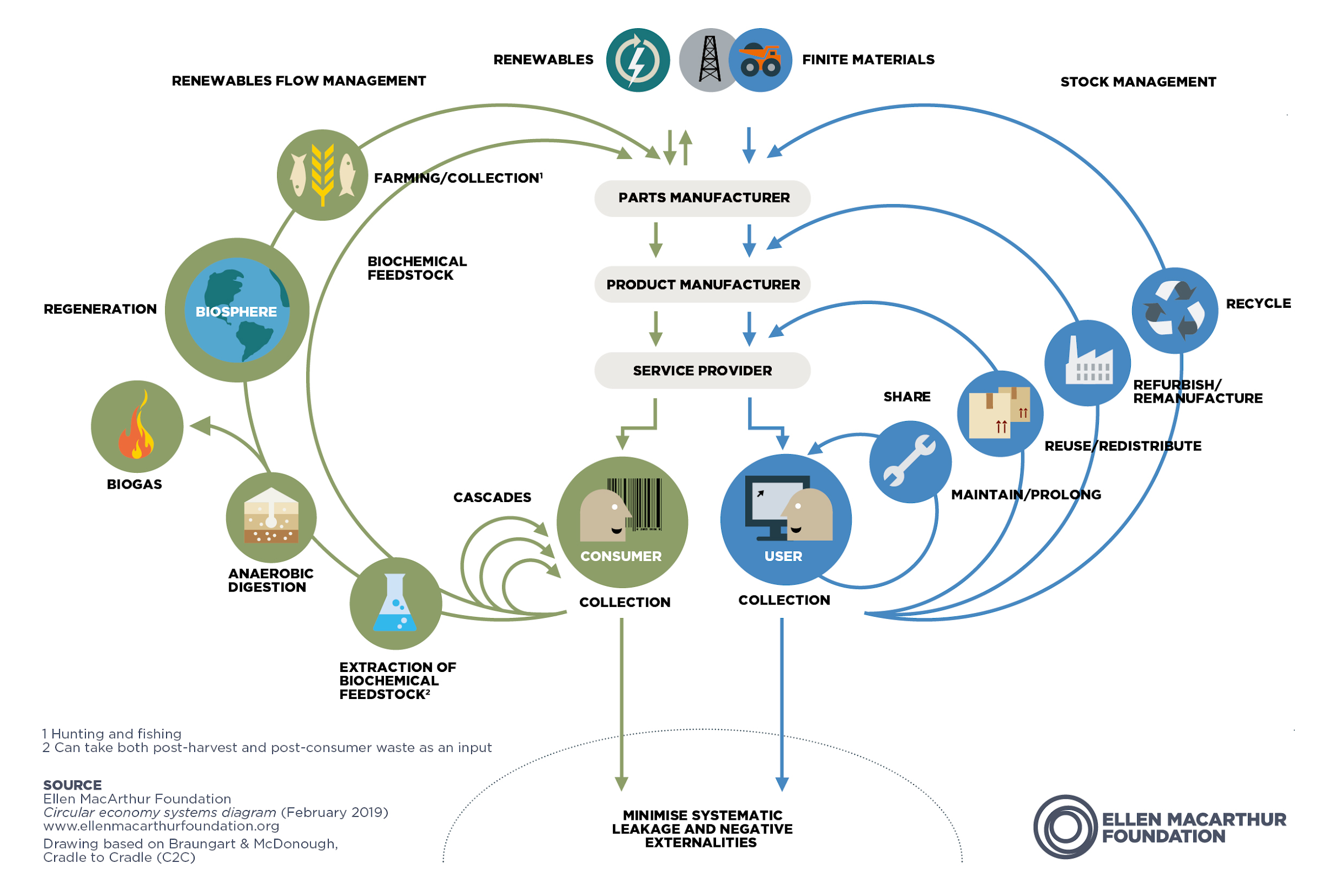
Circular economy framework (Source: Ellen MacArthur Foundation)