Did You Know? Solar Is Dramatically Cleaner Than Fossil Fuels, Even Counting Manufacturing
A fair question people sometimes raise about solar power is whether it's really as clean as advertised once you account for the energy and materials that go into building the panels in the first place. It's a fair question, and thankfully, one researchers have studied in real depth. The short answer: yes, dramatically so.
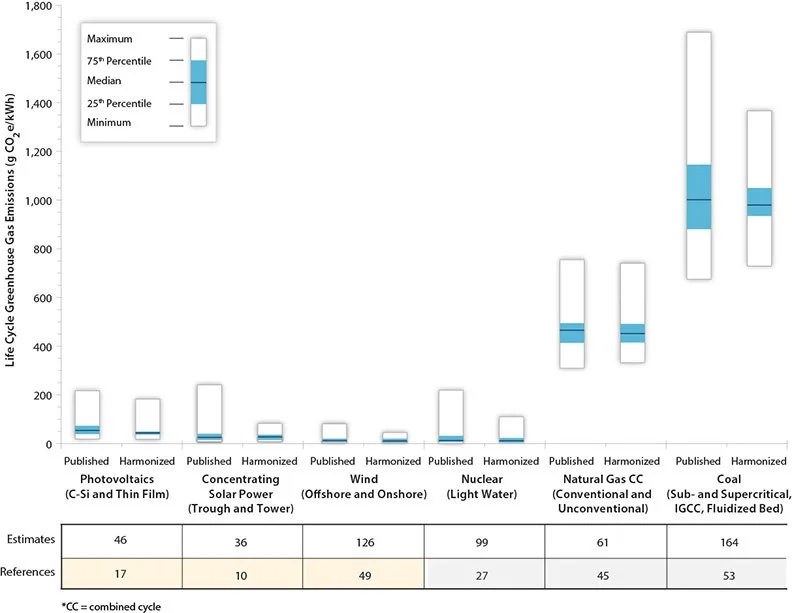
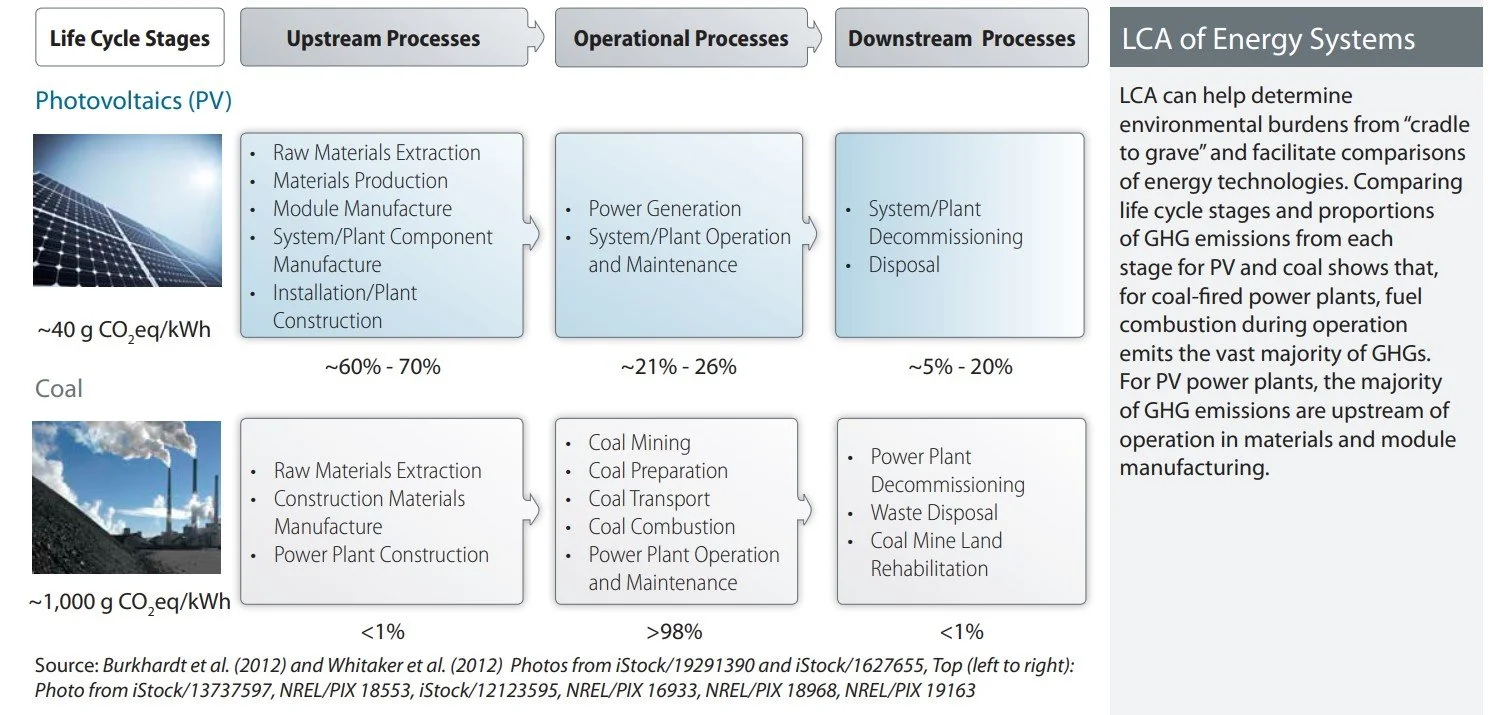
The standard way to compare energy sources fairly is a life cycle assessment, which tallies up emissions across a technology's entire life, from raw material extraction through manufacturing, installation, operation, and eventual disposal. On this measure, solar photovoltaic systems produce a carbon footprint of roughly 14 to 73 grams of CO2 equivalent per kilowatt hour generated. Compare that to burning oil for electricity, at about 742 grams CO2-eq per kWh, or coal, at close to 1,000 grams. That's a 10 to 53 times reduction, depending on the specific solar technology and how it was manufactured, and it holds even after fully accounting for the manufacturing process.
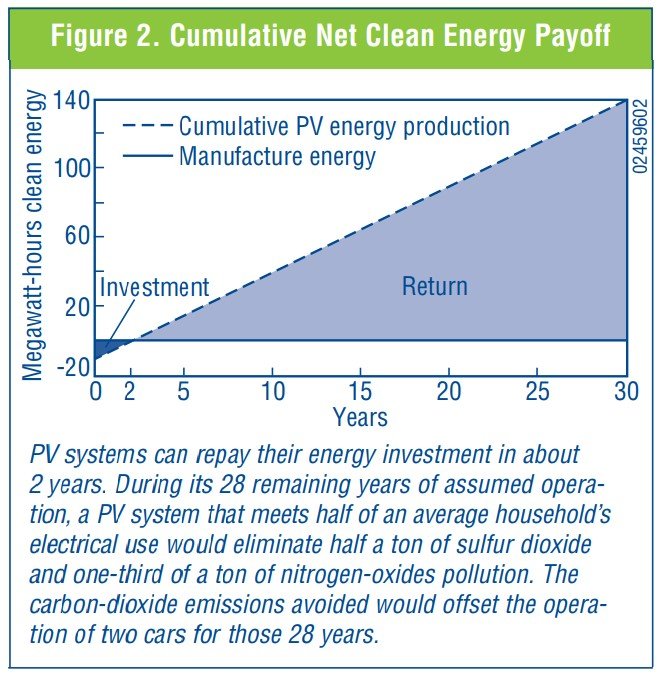
A helpful way to think about this concretely is something called energy payback: the length of time a solar system needs to operate before it has generated as much energy as it took to manufacture it in the first place. Researchers at the National Renewable Energy Laboratory calculated this back in 2004 and found an average payback period of about two years for a typical rooftop system, and that number is based on solar panel efficiencies that have improved substantially since then, meaning today's real world payback periods are likely even shorter. Given that a typical panel keeps producing power for 25 to 30 years, that means the overwhelming majority of a solar panel's working life, upward of 90%, is spent generating power with essentially zero ongoing emissions.
None of this means solar manufacturing is impact free, and it's worth being honest about that. Most solar cells rely on silicon, which is refined from pure quartz crystal or quartz rich sand through an energy intensive smelting process that requires extremely high temperatures. The manufacturing process also uses hazardous chemicals, including hydrofluoric acid, that require careful handling and disposal. Researchers continue working on lower impact alternatives, including thin film solar technology, which uses meaningfully less energy and fewer raw materials to produce than traditional silicon panels, while still delivering strong performance.
Every method of generating electricity comes with trade-offs somewhere along its life cycle. But when you weigh the full picture honestly, start to finish, solar's environmental cost is a small fraction of what fossil fuels demand, and that gap keeps widening as manufacturing processes and recycling technology continue to improve.
References
National Renewable Energy Laboratory. (2004). PV FAQs: What is the energy payback for PV? https://www.nrel.gov/docs/fy04osti/35489.pdf
National Renewable Energy Laboratory. (2012). Life cycle greenhouse gas emissions from solar photovoltaics. https://www.nrel.gov/docs/fy13osti/56487.pdf
Orlando, C. (2019, October 30). How environmentally friendly is solar power? Chariot Energy. https://chariotenergy.com/blog/how-environmentally-friendly-is-solar-power/
Tawalbeh, M., Al-Othman, A., Kafiah, F., Abdelsalam, E., Almomani, F., & Alkasrawi, M. (2021). Environmental impacts of solar photovoltaic systems: A critical review of recent progress and future outlook. The Science of the Total Environment, 759, 143528. https://doi.org/10.1016/j.scitotenv.2020.143528