Did You Know? Snow Barely Slows Down Your Solar Panels
Ask anyone unfamiliar with solar power what they think happens to panels in a Bow Valley winter, and you'll usually hear some version of "they must be useless half the year." The real answer is more interesting: with the right mounting angle, snow only reduces annual energy production by 1 to 5%. That's a rounding error compared to what most people assume.
We know this thanks to a genuinely clever study by researchers at the Northern Alberta Institute of Technology, who set up matched pairs of solar panels at mounting angles ranging from a shallow 14 degrees up to a near vertical 90 degrees. For each angle, one panel had snow manually cleared after every snowfall, while its twin was left alone to shed snow naturally. Over three full years of data collection, the panels that were kept snow free produced only 1 to 5% more electricity than their snow covered twins mounted at the same angle. In other words, brushing snow off your panels every time it falls buys you almost nothing. What actually matters is the angle you mount them at in the first place, and the study found the sweet spot for balancing maximum sun exposure against snow accumulation sits around 45 degrees.
There's a simple reason winter snow isn't the production killer people assume: timing. The overwhelming majority of a solar panel's annual output happens between March and October, when days are long and snow is scarce to begin with. December and January, the snowiest and darkest months, were never going to be big production months for solar anyway, snow or no snow. And when snow does land on a panel, it typically melts off faster than it would on an asphalt shingle roof nearby, because panels have a smooth, low friction surface and run slightly warmer than their surroundings thanks to sunlight absorption, even on an overcast day.
There's a practical takeaway here for anyone planning new construction in Canmore or anywhere else in the valley: design your roofline with solar in mind from day one. That means prioritizing southern exposure and keeping roof space clear of unnecessary chimneys, vents, and other penetrations that create shading or installation headaches later. Building this way from the start costs very little extra, and it means every future owner of that building gets to benefit from decades of strong solar performance without ever having to think about winter as a limitation.
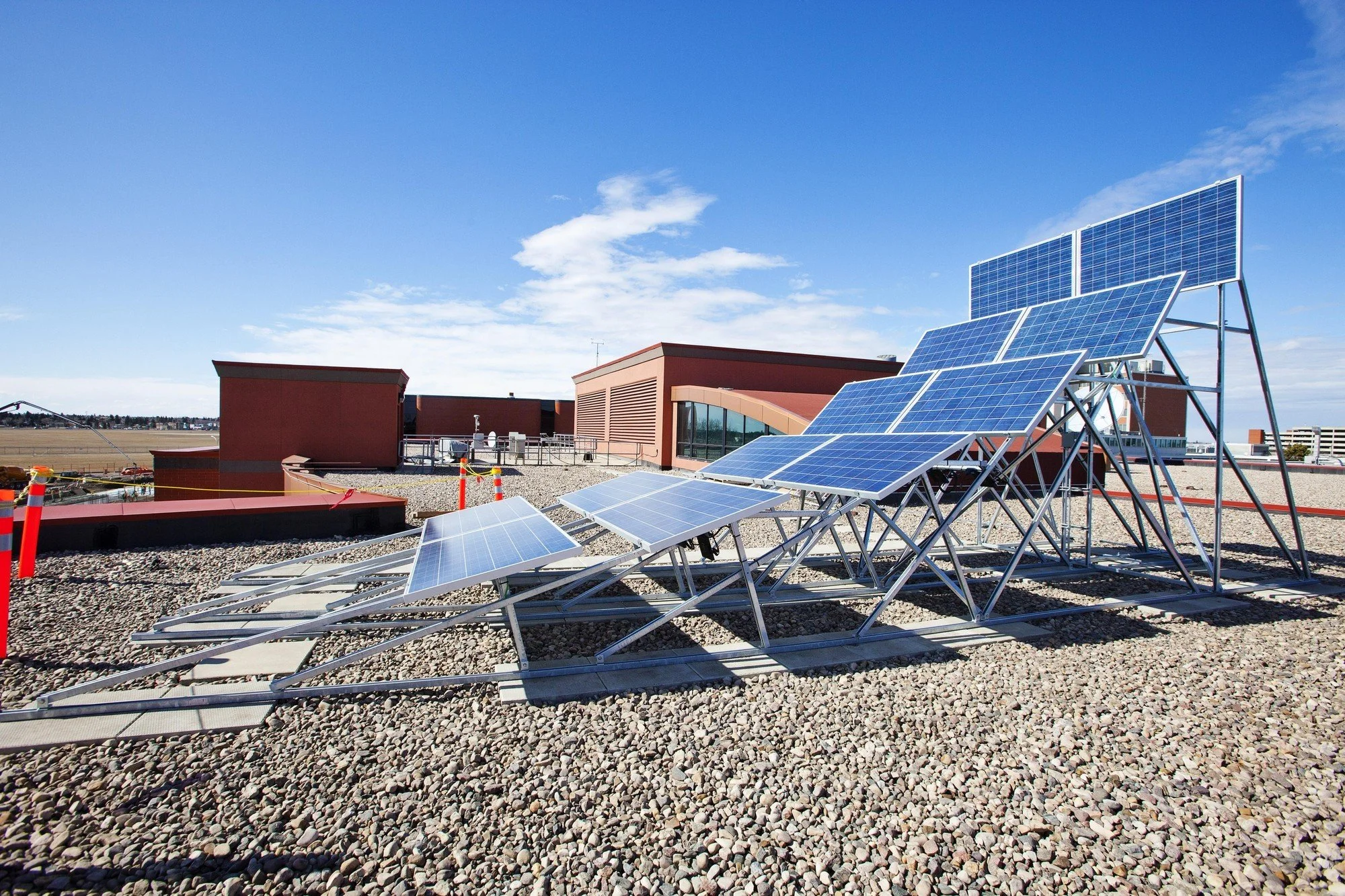
NAIT solar array (Source: NAIT, 2016)
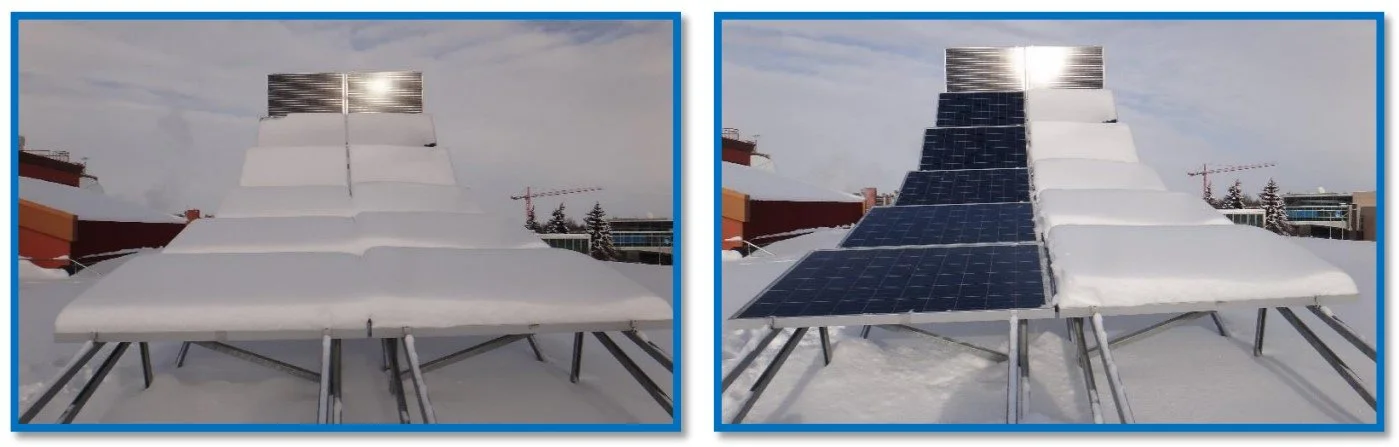
NAIT solar array with snow (Source: NAIT, 2016)
References
Northern Alberta Institute or Technology. (2016). Alternative energy program: Solar photovoltaic reference array report. https://empowerenergysolar.ca/wp-content/uploads/2017/03/NAIT_Reference_Array_Report_March_31_2016_revD.pdf